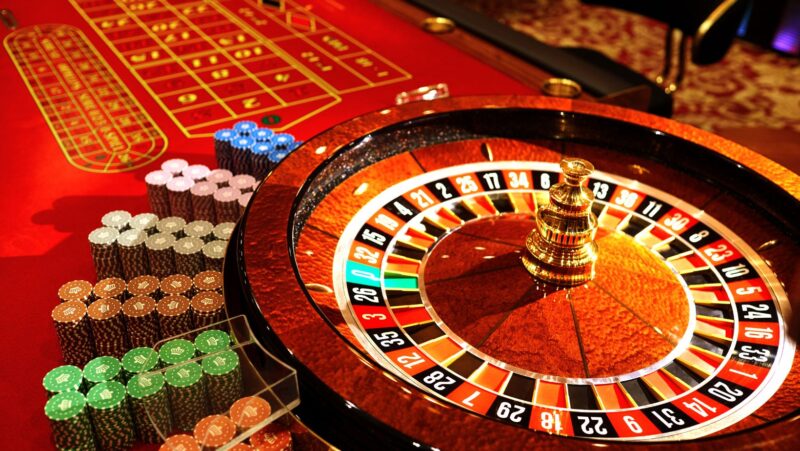
Players engage with the equipment, both machine and table, created for different levels of player engagement, preparation, and gameplay decision-making.
https://thespingranny.com/
While some casino players are interested in the instantaneous and minimal gameplay approach, others are attracted to the organized structure that demands both strategy and player engagement.
To cater to the different needs, casinos offer both slot machines and tables.This paper shall discuss the differences between slot machines and casino tables.
There are Slot machines take up a lot of floor space and do not require dealers.
They provide continuous action and accommodate varying levels of betting.
Each machine contains a random number generator (RNG), so that each result is independent of others.
Player interaction in slots is limited and may be restricted to:
- Choosing a Machine
- Selection of a stake
- Spin cycle initialization
After being turned on, it controls the remainder of the process.
The ease with which slots operate makes them desirable for those wanting fast-paced play.
While play can be short or continuous for several hours, it depends on personal choice.
Contemporary slot machines differ from one another.
Classic slot machines have the looks of machines, whereas video slots offer animations and themes.
Nonetheless, both aspects of slot machines function the same.
There is no influence of the previous outcomes on the results.
Slot machines can also vary in their payout patterns.
There may be machines whose payout patterns include frequent winnings.
There can be machines whose payout patterns entail infrequent winnings.
Authors
Table games have visible rules for play that involve shared playing surfaces.
The results are generated through the use of cards, wheels, or dice, and for each game, there is a dealer.
There is order that is involved in playing at tables.
Table games display the following common characteristics:
- Well-defined rules
- Player choices that determine results
- Continuous engagement with other players and dealers
In blackjack, players make decisions about whether to take another card or to stand.
In roulette, wagers can be placed either on numbers, or colors, or parts of the spinning wheel.
Craps has numerous betting possibilities, which need to be learned through direct experience.
Table games usually progress at an analyzed pace.
Dealers handle various bets, call results, and enforce various rules in table games.
Verbal and non-verbal communications are usually important in certain games, for example, roulette and blackjack.
Contrary to slot machines, a degree of player intervention can be applied.
In the case of blackjack, good decision-making can minimize expected losses, though luck remains a pivotal factor.
Risk and House Edge
All casino games feature a house advantage.
This can vary depending on the specific game that is being offered.
Mostly, players who are concerned about probability end up considering the house advantage in their decision of which games to play.
Typical house edges for these games include:hta
Slot Machines: 2% – 10% or Higher
Blackjack: Less Than 1% with Optimal Play
Roulette (single-zero): Approximately 2
Select craps bets: 1% –
Slots have relatively higher house edges, as they rely on speed and simplicity.
Table games pay off preparation and informed decision-making, which give players leverage over results.
The Casino Floor and Social Interactions
The_slots encourage individualized attention.
Even in an overcrowded location, one is concentrating on the screens without much social interactionexcept for a brief response.
Table games promote a sense of community.
Players participate in games where results are common to all, as they involve the same cards, dice, or wheel.
Players can also communicate as they participate in these gambling games.
Casino design encourages these practices.
Slots are set up in a row format, while table games allow players to set up a perimeter around a focal point.The physical arrangement affects how players interact.
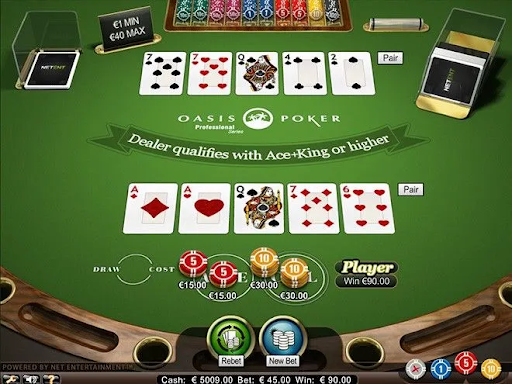
While a somewhat Slots are not very preparation-intensive.
The players are guided by on-screen Instructions, and errors will not interrupt gameplay either.
Players new to casino environments would love slots.
Table games involve a steeper learning curve.
One must be cognizant of rules, betting, and even signals.
Sometimes, mistakes can slow down a game and put players under additional stress.
To make this transition easier, casinos provide low-stakes table games or teaching sessions.
As these individuals feel more comfortable and informed, they will typically make the transition to table games.
Time Commitment and Pacing
There Slot machines provide players with complete control over the speed of the spins.
These spins may be fast or slow, and players have the authority to stop them at any time.
Table games are based on timings for a group of players.
Players are required to wait their turn and complete each round before proceeding to another round.
These differences affect player preferences:
Limited time is an advantage when it comes to slot
Longer gaming times increase the appeal of the table games
The casinos can benefit from both versions considering the varying engagements of players.
Technology and Game Evolution
The evolution of Technology has changed the way casino gaming is conducted.
Slot machines have changed from mechanical reels to new technological interfaces that have graphics and bonuses.
Casino table games have not remained aloof to technological advancements either.
Card shufflers, betting displays, and player tracking systems have been introduced to aid dealers.
Hybrid games involve dealers and computer interfaces.
Despite such transitions, everything is the same as far as core mechanics are concerned.
Cards have not changed in value, wheels are continuing to spin, and dice are following the same laws of physics.
Player Motivation and Game Choice
In conclusion,
Players pick games according to their personal objectives.
They are influenced by the following:
- DESIRE FOR IMMEDIATE RESULTS
- Interest in decision-based play
- Preference for Social Environments
- When analyzing
Tolerance for the complexity of rules
There isn’t an appropriate format for all individuals.
This is because casinos allow gamblers to take breaks by switching games.
Regulation, Fairness, and Responsible Play
It also has authorities to ensure equity in most of the games played at casinos.
Slot machines and other games at casinos have their randomness checked, as well as their payouts.
Responsible gambling is also dependent on format.
Slots provide continuous play.
There is time distortion.
There are pause periods provided by table games.
Casinos promote responsible gaming by offering betting controls, excluding players for their own protection, and visible time displays.
Knowledge about which games influence focus and speed helps consumers make informed decisions.
Conclusion Variability in casino games is the result of well-planned designing.
Slot machines are designed for simplicity, speed, and solitary playing.
Table games are designed for regulation, social interaction, and well-informed decision-making.
Although randomness exists in both, it is very different in nature.
When the structure, pace, risk, and social elements are understood, it becomes easier for players to make their decisions based on their personal preference.
Today, casinos provide both versions for their customers.